



Why do some divisive candidates still win? Exploring likeability in politics through research on dark personality traits, homophily, and polarisation.
Elections are usually described as contests of ideas. Parties publish manifestos, debate the economy, argue over migration, climate and public services, and voters are assumed to weigh these proposals before casting a ballot. Yet every election is also a choice of people. Behind each programme stands a face, a voice and a temperament, and the electorate is asked to entrust power to a human being, not to a policy paper.
For most citizens, politics is a distant and time-consuming affair. Political science has long shown that voters tend to be poorly informed and only moderately motivated, and that they rely on mental shortcuts to reach their decisions. A candidate’s personality is one of the most powerful of those shortcuts. It is visible, easy to judge and emotionally charged. Whether a politician comes across as warm or cold, honest or calculating, steady or erratic, shapes how much voters like them, and likeability in politics quietly colours everything else they hear.
Understanding how that mechanism works is no longer optional for anyone in political communication. It sits at the heart of how campaigns are built, how leaders are positioned and how reputations are won or lost.
How researchers measured likeability in politics without party bias
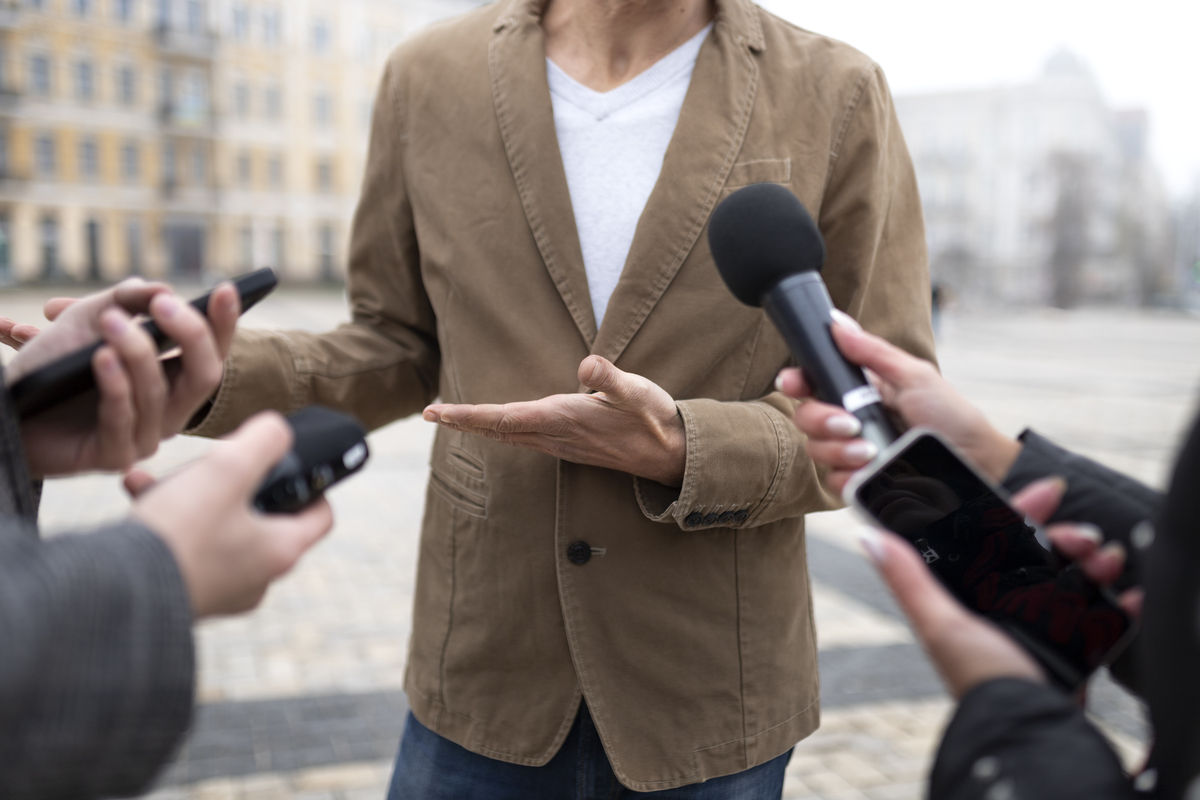
The difficulty with studying a candidate’s personality is that voters rarely judge it neutrally. Supporters tend to see their own leader as competent and trustworthy, while opponents see the same person as arrogant or dishonest. Partisanship and perceived personality are so tightly bound that it becomes hard to tell which one is driving the evaluation.
A 2021 study by Alessandro Nai, Jürgen Maier and Jug Vranić, published in Frontiers in Political Science, addressed this problem with an experimental design. Almost 2,000 American respondents were randomly shown one of eight short profiles of a fictitious independent candidate. Each profile was written to signal a single personality trait: one of the Big Five (extraversion, agreeableness, conscientiousness, emotional stability and openness) or one of the three traits of the so-called Dark Triad (narcissism, psychopathy and Machiavellianism). Respondents then rated how warmly they felt towards the candidate.
Because the candidate belonged to no party, the experiment removed the partisan lens through which real politicians are normally seen. What remained was a clearer view of how personality alone shapes likeability in politics. The results point to three findings, each with direct consequences for political communication.
The public penalises the Dark Triad
The first finding is intuitive. On average, voters strongly dislike candidates who display dark personality traits, rating them significantly and substantially lower in likeability than candidates with more positive profiles.
The three traits are distinct but related. Psychopathy combines impulsive thrill-seeking with emotional coldness, manipulation and antisocial behaviour, and in politics it tends to translate into a confrontational, aggressive style of competition. Narcissism involves an inflated self-image, vanity, a craving for admiration and a sense of entitlement, often accompanied by overconfidence, deceit, hypercompetitiveness and a readiness to take reckless risks. Machiavellianism describes a cynical and calculating outlook, the pursuit of money, power and status, and the use of cunning tactics to control others. All three are associated with harsher communication and more aggressive forms of humour.
Given that most people prefer leaders with a positive personality, it is hardly surprising that these traits carry an electoral cost. For the general public, a candidate who appears manipulative, self-absorbed or hostile is a harder sell, however strong the policy offer.
Like attracts like in a campaign
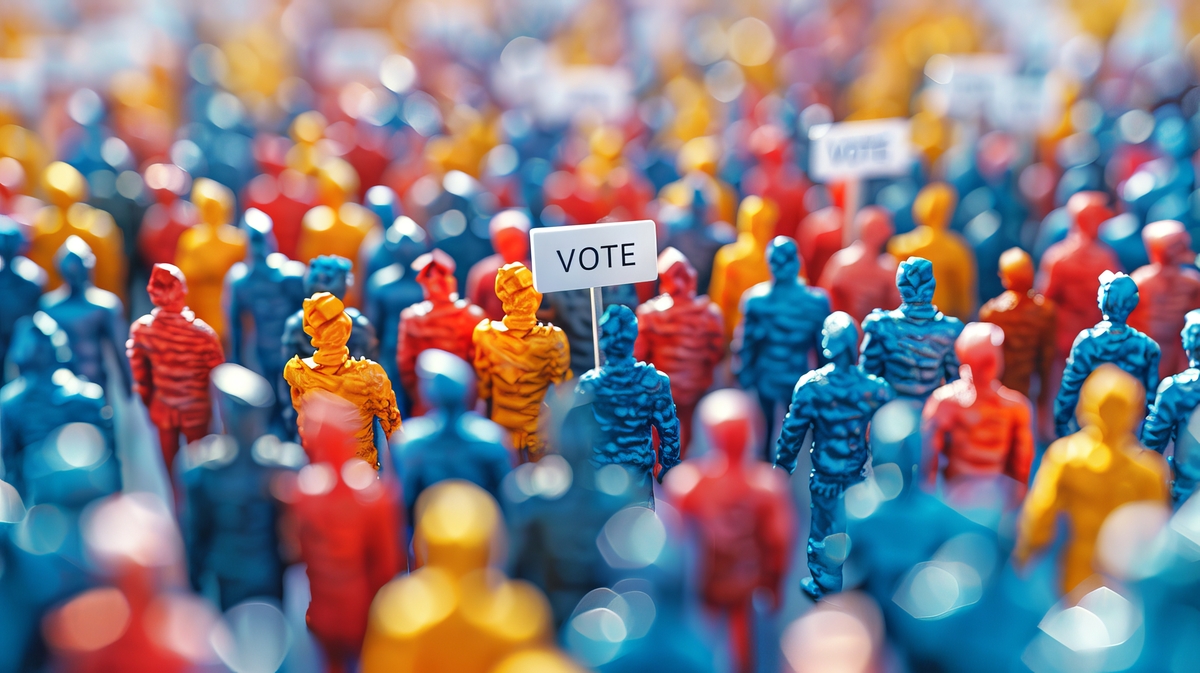
The second finding is far less obvious, and arguably more important. Voters who themselves score higher on narcissism, psychopathy and Machiavellianism tend to like dark candidates. The effect is strong enough that, for this group, the penalty observed in the wider public is completely reversed. A profile that alienates most voters becomes an asset with a specific segment of the electorate.
This reflects a broader principle known as homophily, or congruence. People are drawn to those who resemble them, and voters are more likely to support candidates whose personality matches their own. A politician who looks and sounds like them appears to understand their world and to share their principles. Other research points in the same direction: aggressive political metaphors mobilise voters with aggressive dispositions while demobilising less aggressive partisans, and uncivil content lowers political trust among citizens who dislike conflict.
The implication is uncomfortable but clear. The same message can attract one audience and repel another, depending on the psychological profile of the people receiving it. There is no single, universal measure of likeability; there is likeability in the eyes of a particular voter.
Partisanship as a filter and shield for a candidate
The third finding concerns party loyalty. The effects of a candidate’s personality were, in some cases, stronger among respondents with weak partisan attachments. Strong partisanship acts as a filter through which new political information is received, accepted and processed. Committed supporters behave as motivated reasoners: often without realising it, they interpret what they see in a way that protects the side they already belong to.
For loyal partisans, therefore, a leader’s personality matters less, because the party label does most of the work. For voters with looser ties, personality carries more weight because there is less of a partisan anchor to override it. These are precisely the voters who tend to decide close elections.
The broader lesson is that personality matters above and beyond partisanship, but its influence is unevenly distributed. It is weakest where loyalty is strongest and most decisive where loyalty is thin.
The Trump paradox
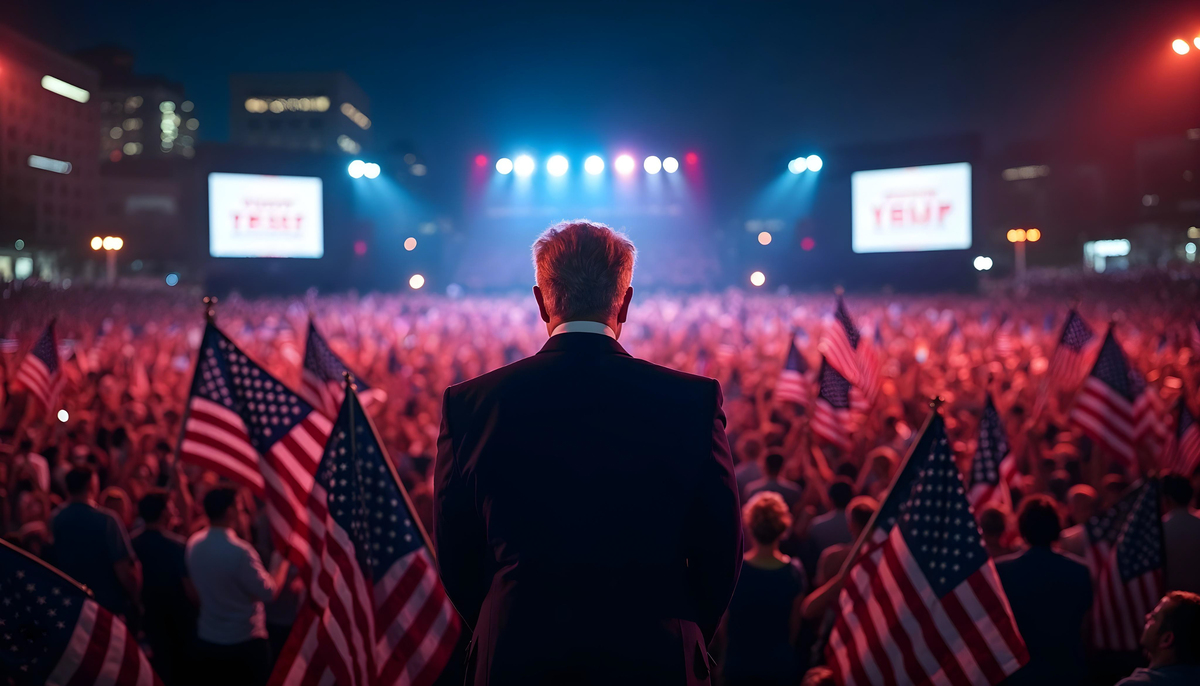
If the public dislikes dark politicians, how can a candidate widely perceived as scoring high on those traits win the presidency of the United States twice? The case of Donald Trump does not contradict the research. Read carefully, the findings help to explain it.
First, likeability in politics is not the same as a vote. The experiment measured how warmly people felt towards a candidate, not whom they chose. Real elections are also decided by the economy, by migration, by the appeal of the opponent and by the electoral system itself. In 2016 Trump won the Electoral College while losing the popular vote.
Second, real candidates have parties. The experiment deliberately used an independent candidate to neutralise partisanship, yet in practice, partisanship is exactly what shields a polarising leader. If strong partisans are less affected by personality, a committed Republican can vote for a candidate they do not personally warm to.
Third, perception itself is partisan. In a separate study, Nai and Maier found that American voters with different party identities hold radically opposing views of Trump’s personality, with Clinton voters far more critical than his own supporters. Broad agreement emerged mainly on his extraversion and, to some extent, his narcissism. Much of the “darkness” is in the eye of the opponent.
Fourth, homophily is enough to build a core. A candidate does not need to be liked by the majority to dominate a primary; a cohesive and motivated base will do. Later research by Nai and colleagues adds that leaders with darker profiles are associated with greater hostility towards opponents among their own followers, while the dark traits of the rival leader have little effect. The dark leader energises and consolidates their own side without mobilising the other side to the same degree, feeding what Nai describes as a polarising spiral.
Finally, context changes the reading. In a climate of distrust towards institutions, traits that appear aggressive or manipulative in a neutral setting may be interpreted as strength, authenticity or a refusal to play by the establishment’s rules. This last point is an interpretation rather than a finding of the study, but it is consistent with the authors’ own caution that the United States, with its fierce competition and deep affective polarisation, is a particular case.
What likeability in politics means for political communication
For strategists, the research offers a useful correction to the idea that a campaign is simply a matter of getting the message right. The person delivering the message is part of the message, and the way that person is perceived can amplify or neutralise everything else.
Several practical conclusions follow. Persona is strategy, not decoration: how a leader speaks, argues, jokes, and reacts under pressure sends personality cues that voters read constantly, often more attentively than the policy content itself. Audience segmentation must go beyond demographics and party lines, because voters also differ in psychological profile, and a combative tone that fires up one segment can quietly push another away.
The persuadable middle, voters with weak party ties, is where personality weighs most, so communication aimed at them should prioritise credibility, steadiness and warmth over confrontation. Above all, polarising styles carry a hidden cost. They can consolidate a base, but they also deepen hostility between camps and erode trust among citizens who dislike conflict, a trade-off with consequences long after election day.
The same logic applies well beyond the United States. In multiparty systems such as Greece, where loyalties are more fluid and coalition dynamics matter, the weight of personality among weakly attached voters may prove even greater.Whether that holds is an open question, since the authors themselves call for comparative research in more consensual democracies, but it is a question every campaign should be asking.
Likeability in politics is not a superficial extra in electoral politics. It is a cognitive shortcut through which voters filter information, judge credibility and decide whom to trust. The evidence suggests that the public at large rewards positive personalities and penalises dark ones, yet that penalty is neither universal nor fixed. It is softened by partisanship, reversed among voters who share a similar profile and reshaped by polarisation.
Elections are fought over policies, but they are also won and lost on personality. Effective political communication begins by recognising both.
References
- Nai, A., Maier, J. and Vranić, J. (2021) Personality Goes a Long Way (for Some). An Experimental Investigation Into Candidate Personality Traits, Voters’ Profile, and Perceived Likeability. Frontiers in Political Science, 3, 636745.
- Nai, A. and Maier, J. (2021) Teflon Trump? Shifting Public Perceptions of Donald Trump’s Personality Traits across Four Studies over 18 Months. International Journal of Public Opinion Research.
- Nai, A., Ferreira da Silva, F., Aaldering, L., Gattermann, K. and Garzia, D. (2025) Ripping the public apart? Politicians’ dark personality and affective polarization. European Journal of Political Research. See the University of Amsterdam press release.