





How Zohran Mamdani built a winning political communication strategy using social media, storytelling, and grassroots mobilisation.
Zohran Mamdani’s unlikely rise to power hinged on an innovative communications strategy that fused old-fashioned grassroots organising with cutting-edge digital media. As Andrew Epstein, Mamdani’s campaign communications director, recalls, they never assumed voters would show up – “If you’re a New Yorker, we want to talk to you about voting for this agenda and for this candidate. We want you to be part of this. We went out, and we believed that we could find and motivate those people”. In practice, the campaign treated every New Yorker as a potential supporter, using social-first content to build a personal connection and then following up with boots-on-the-ground outreach. This approach paid off: by election time, Epstein notes that “a great number of New Yorkers felt protective of [Mamdani]” – voters saw him as a champion of their causes rather than a distant politician.
Zohran Mamdani for NYC: A Compelling Narrative
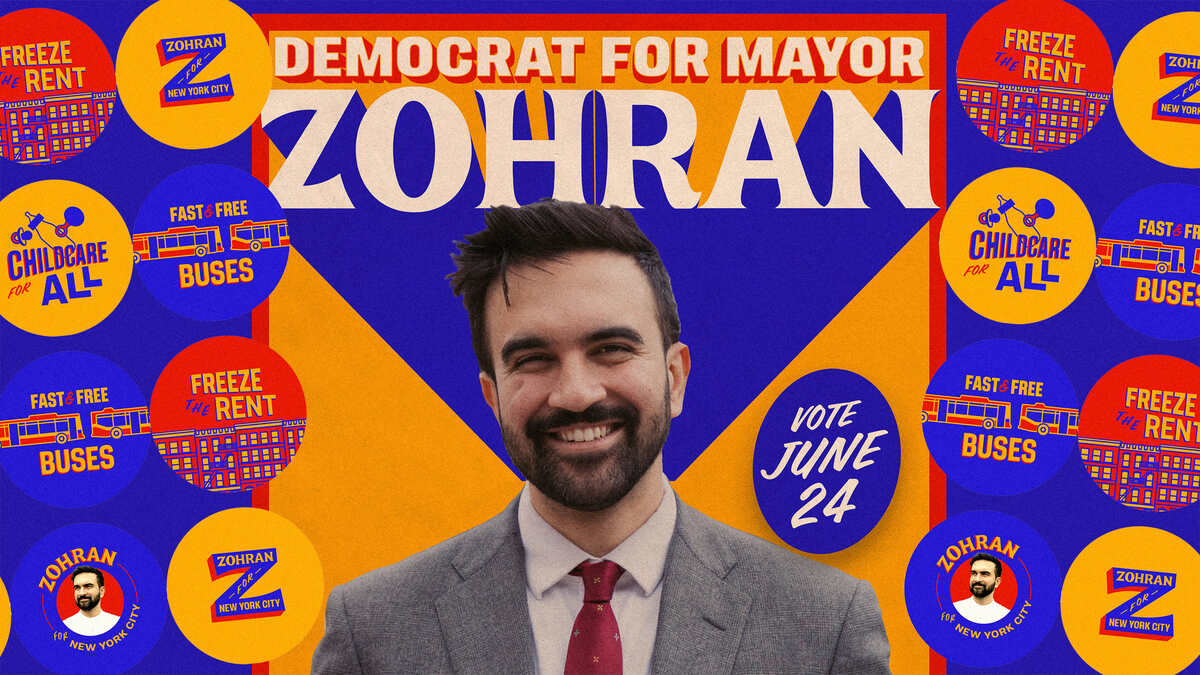
Mamdani’s team deliberately crafted an accessible persona tied to a focused policy agenda. Rather than a laundry list of abstract promises, they boiled the message down to three concrete demands (freeze the rent, free buses, and affordable living), repeating them relentlessly. Journalists observed that this “brutal simplicity” stood in stark contrast to opponents who rattled off endless policy points. Forbes analysts indeed highlight Mamdani’s win as evidence of “a shift from TV advertising to social-first content” and from polished, centralized messaging to “community-powered movements”.
In Mamdani’s case, the campaign put him directly into voters’ feeds and screens, often with a dose of humour or surprise. For example, a viral campaign video showed Mamdani running a city marathon with the slogan “I’m running… to freeze the rent.” As Epstein recounts, the campaign filmed Zohran on the move, loving a pun that turned him into “the ‘running-to-freeze-the-rent’ guy”. This clever media stunt (done just days before the election) epitomised the strategy: make policy memorable through personality and wit.
Behind every meme or video was disciplined messaging. Mamdani was not treated as a standalone celebrity, but the avatar of his agenda, as Epstein puts it: “We were not just making Zohran famous; we were actually making him the avatar for an agenda that was directly speaking to people’s lives“. By tightly linking the candidate to core issues – rent control and transit funding – the campaign ensured that even casual supporters could instantly identify what Mamdani stood for. When Andrew Cuomo’s super-PAC poured millions into negative ads, Mamdani’s supporters had already internalised his message. Epstein notes that by the time those ads aired, people “had already developed a relationship to Zohran… It was working when people would not just recognize Zohran on the street but be like, ‘Hey, there’s “freeze the rent” guy,’ ‘There’s the “fast and free buses” guy.'” In short, the message was memorable and became part of voters’ own vocabulary, protecting Mamdani from negative attacks by reframing him as their champion.
The campaign’s tone was equally strategic. Rather than taking a hard-nosed, confrontational approach, Mamdani communicated in an upbeat, inclusive voice. As Wired magazine observes, while many politicians chase viral trends or gimmicks, Mamdani “simply shows up” on social media with substantive content about real issues. His videos and posts were filmed in everyday settings – at a diner, on a subway platform, or at a beachside polar plunge – which made him relatable. This authenticity invited people into what Epstein calls the “Zohraniverse”: a vibrant portrayal of New York life under his politics. Epstein explains that they treated New York City itself as a character: they “brought the message into these incredibly eclectic places throughout the city… [making] NYC a character in this,” showing Zohran “taking you through this city as it’s facing this affordability crisis while deeply loving the city as well”. The contrast with Cuomo’s gloom-and-doom warnings was stark – Mamdani’s world was one people wanted to be part of.
A key element of the strategy was encouraging organic fan-driven content. Unusually for a political candidate, Mamdani inspired a genuine online fandom. Social feeds filled with fan art, “fancams” (fan-made highlight reels), and memes set to Hamilton or Jay-Z tracks. The campaign did not orchestrate this grassroots creativity, but it amplified his reach immensely. As Xavier University media scholar Ashley Hinck notes, Mamdani’s young supporters “use their experiences from online fandom to do politics… Those are the skills… to engage with politics“.
In practice, the campaign happily fueled this phenomenon – they posted polished content to kickstart trends, then let fans run with it, expanding Mamdani’s message in their own voices. As one campaign insider put it, while Mamdani himself maintained a professional demeanor, he “encourages that culture around him“. By January, for example, at Coney Island’s famous Polar Bear Plunge, he quipped on camera, “I’m freezing… you’re next mayor” – a policy pledge delivered with a grin and posted across social platforms. Such moments gave supporters bite-sized catchphrases to share (the Nation noted his memes “highlight his telegenic smile, progressive values, and erudite sense of humor” to motivate volunteers), further blurring the line between pop culture and politics.
NYC 2026 – Ground Game: Turning Online Fans into Volunteers
Importantly, Mamdani’s campaign didn’t rely solely on social media. Every online connection was designed to feed into concrete action. Epstein describes a “virtuous cycle” in which digital content primed supporters, who then carried the message door-to-door. In one example, the campaign filmed Mamdani knocking on the doors of first-time donors to ask what motivated them to give – then shared those clips to inspire others. As Epstein explains, the result was that people would see a video about Zohran and then have a volunteer appear at their home, saying, “I was just watching that video…and now you’re here, inviting me to be part of it.” This follow-up transformed a digital connection into a personal invitation, dissolving any “parasocial” distance between candidate and citizen.
The scale of the ground operation was truly unprecedented. The campaign’s official figures show 104,764 volunteers knocking on 3.1 million doors, making 4.5 million calls, and sending 2.7 million texts. (Transition team statements likewise highlight this “mass engagement,” mobilising more than 100,000 volunteers and millions of contacts). In practical terms, this meant that any New Yorker who saw Mamdani online soon felt a personal connection. The campaign deliberately fused narrative and organizing. Epstein notes they told the story of each campaign milestone as it happened to inspire others: “It became a kind of virtuous cycle of content and volunteering.” In short, Mamdani’s communicators treated every digital impression as the first step in a multi-step journey from awareness to action.
This integrated model proved especially potent against attacks. By primary day, Mamdani wasn’t just a name on a TV ad; he was a familiar face and trusted voice. When Cuomo’s outside super-PAC finally blasted the airwaves, many voters already had a relationship with Mamdani. Their reflex was sympathy rather than suspicion – Mamdani felt like “their” candidate. As one campaign strategist explained, this defensive solidarity was no accident: Mamdani’s team built trust and goodwill well before the campaign heated up.
Academic Insights: Media, Identity and Engagement
Mamdani’s success reflects broader media dynamics studied by scholars. In the digital era, social platforms are powerful tools for identity and community building. For example, political scientists note that social media “allows individuals to express political values and demonstrate group belonging,” effectively strengthening a sense of shared identity. Mamdani’s messaging deliberately tapped this effect.
By repeatedly centering his campaign on everyday New Yorkers’ struggles and emphasizing inclusivity, the campaign helped people feel that “this is our movement.” The positive, values-driven tone also aligns with research on coalition-building and solidarity. In sum, academic studies confirm the intuition behind Mamdani’s playbook: well-crafted social media content can create identification and solidarity among voters, which then translates into participation.
Zohran Mamdani & Key Takeaways for Campaigners
Politicians looking to replicate Mamdani’s communication strategy should note the following lessons:
-
Align candidate and agenda. Make the candidate the face of the platform, not the other way around. Mamdani’s team didn’t just promote him; they made Mamdani synonymous with specific policies (e.g., “freeze the rent”). As Epstein notes, this approach turned Mamdani into “the avatar” of his agenda. Voters should see the candidate through the lens of the issues, so every reference to the person recalls a principle.
-
Lead with social‑first content. Invest in creative, digestible media rather than relying on traditional ads. Forbes observers highlight Mamdani’s win as an example of “a shift from TV advertising to social‑first content”. The campaign produced highly‑polished videos (marathon freeze-rent run, city events) optimized for Facebook, Instagram, TikTok, etc. Politicians should similarly craft short, shareable clips – not just speeches – and use culturally relevant hooks (music, humour, puns).
-
Foster genuine engagement. Encourage supporters to co-create content. Rather than strictly controlling the narrative, Mamdani’s campaign amplified user-generated “fandom.” As Wired observes, countless fan edits and memes were encouraging one another to vote. Campaigns should make it easy for enthusiastic supporters to share images, slogans, or videos, creating an organic community feel. (Tip: use platforms like TikTok or Instagram and collaborate with sympathetic influencers to seed this enthusiasm).
-
Integrate online and ground operations. Digital attention must convert to real-world mobilization. Mamdani’s playbook was not “all phone, no feet.” Every viral moment was paired with organising. As Epstein describes, online content sparked canvass visits and donations, forming a “virtuous cycle”. Campaigns should coordinate so that social hits trigger targeted phone banks or door‑knocking in receptive precincts.
-
Maintain authenticity and positivity. The tone matters. Mamdani’s videos showed genuine warmth and curiosity. He “simply shows up” – connecting on issues people care about – rather than relying on cynical negativity. Voters rewarded this sincerity. Politicians should therefore present an inclusive, hopeful message. Criticism of opponents can be factual, but avoid alienating potential allies; as Epstein notes, Mamdani won by finding “common ground on the agenda” without throwing anyone “under the bus”.
-
Prepare for opposition early. Finally, a strong communications base can blunt attacks. Mamdani’s solid digital following and personal rapport meant that late negative ads had little effect. In campaigns with resource disparities, it’s crucial to invest early in building name recognition and trust, so negative ads later become background noise. Epstein notes that by election day, many New Yorkers instinctively defended Mamdani against Cuomo’s million‑dollar blitz – a testament to having “developed a relationship” long before.
Turning Insight into Winning Campaigns
Mamdani’s campaign was not an accident. It was the result of disciplined messaging, narrative control, community mobilisation, and strategic crisis handling. It proved that in modern politics, elections are not won by noise, but by meaning and by systems that turn attention into trust and trust into action.
This is precisely what we do at UpperComms.
We work with political leaders, candidates, and organisations to design:
-
Clear, persuasive messaging architectures that cut through noise and define your narrative
-
Crisis response frameworks that protect credibility and control the agenda when pressure hits
-
Voter and audience engagement systems that turn visibility into mobilisation and loyalty
From campaign positioning to digital strategy and rapid-response communications, we help leaders build trust, win attention, and convert momentum into results.
If you are preparing for an election, a leadership race, or a high-stakes public campaign, now is the time to move from tactics to strategy.
Crafting impactful messaging, crisis response tactics, and voter engagement frameworks for lasting influence.